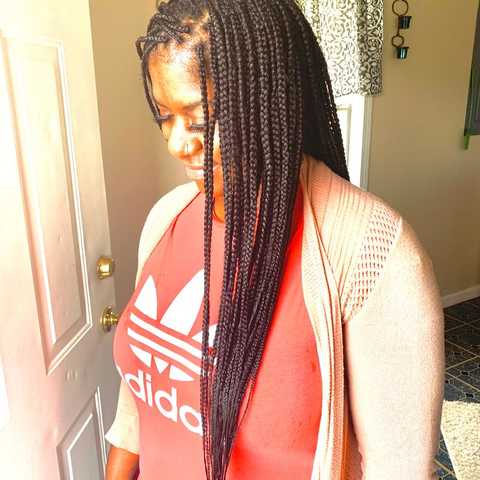
Knotless (Feed Ins) Braids Timeline: What to Expect and How to Make Them Last
By Augusta Hair Braiding and Micro Locs | August 28, 2026
I hear it all the time in Augusta, especially after someone had a rough experience somewhere else and just wants to feel confident again. Most Knotless Braids last about 4–8 weeks. Size, install tension, your hair type, and our hot, humid weather decide if you’re smooth closer to week 8 or you start seeing frizz and slip earlier.
If you’re weighing the value of knotless braids, here’s the honest answer: they’re a low-fuss protective style when they’re installed neatly and you keep up with a simple routine. I’ll walk you through what changes week by week, what makes them “give up” early in South Augusta humidity, and exactly how I tell people to stretch their style without stretching their edges.
Week-by-week knotless braids timeline (4–8 weeks, realistically)
A lot of people call knotless “feedin braids” because the hair is added gradually. That feed-in method is a big reason the style tends to feel lighter and look more natural at the scalp. And yes, it helps with comfort, but longevity still depends on a few real-life things: how small you go, how much you sweat, and how you dry after washing.
Week 1: the “fresh set” phase
Your parts are crisp, the braid pattern is neat, and the style is at its cleanest. This is when I want you doing the least. Keep your hands out of it, keep products light, and protect it at night.
Weeks 3–4: the first turning point
This is where most people notice a little fuzz at the roots or along the braid. In Augusta summers, sweat and humidity speed this up. If you’re active, you might need a gentle cleanse sooner and you’ll want a faster-dry plan.
Week 6: decide if you’re maintaining or starting over
If you want to reach week 8, week 6 is usually when you tighten up your routine. You don’t need heavy products. You do need consistent night protection and careful drying after washing.
Week 8: the “remove or refresh” window
By week 8, most knotless sets are ready to come down or get a small front refresh. Pushing far past this can turn into tangling at the root and extra shedding on take-down. I’d rather you keep your hair strong than squeeze out “one more week” and pay for it later.
Quick reality check: Smaller braids tend to last longer than jumbo, but they also take more time to install. Plan for several hours for knotless styles.
My weekly routine to get closer to week 8 in Augusta heat
People come to me because they want neat work and a comfortable experience. I also keep it practical. If you’re commuting on the Bobby Jones Expressway, running kids around, or coming off a shift from Fort Eisenhower, you need a routine you’ll actually do.
1) Cleanse every 1–2 weeks, but keep it gentle
- Use a diluted shampoo or a braid-friendly cleanser on your scalp. Focus on the parts, not the full length.
- Rinse thoroughly. Leftover product makes itching and buildup worse.
- Blot with a towel. Don’t rough it up. That’s frizz.
2) Dry fast, because damp roots break down a style
In humid Augusta weather, air-drying can turn into “still damp at bedtime.” That’s when braids start looking fuzzy early and your scalp can feel off. Sit under a hooded dryer if you have one, or use a blow dryer on a low to medium setting while you lift sections so air actually gets to the roots.
3) Oil lightly, and only where it helps
A little scalp oil goes a long way. Heavy oils and grease can weigh the hair down, attract lint, and make your roots swell faster after a wash. I usually suggest applying a small amount to the scalp, then massage with your fingertips, not your nails.
4) Night protection is non-negotiable
- Wrap with a satin scarf or wear a bonnet.
- If you like a ponytail, use a soft scrunchie and keep it loose.
- Sleep with braids laid down, not piled and twisted tight on top of your head.
“Thank you LaTasha G! Loooove my knotless braids! Received alot of compliments!”
one of our regulars
Why knotless braids frizz early (and the fixes that actually work)
Early frizz usually comes down to a few repeat habits. The big one is over-manipulating. Constantly redoing baby hairs, brushing the roots, or pulling them into tight styles makes the base loosen quicker.
The second one is moisture without drying. Washing is fine. Leaving braids damp for hours is the problem. If you want longevity, your “wash day” has to include a drying plan.
Edge note: If your edges are already thin or sensitive, keep the front low-tension and keep your styles loose. I also wrote a deeper guide on knotless braids for thinning edges that’s worth reading before you push past week 8.
When I tell you to rebook (and how to plan it around real life)
If your goal is healthy hair and a neat look, I usually recommend planning a refresh or take-down around weeks 6 to 8. If your front is loosening first, don’t wait until it’s fully grown out. That’s when you start seeing tangling and extra breakage during removal.
A lot of my regulars keep a steady cadence with their hair in general. One client put it simply: they come back consistently and they’re “never disappointed.” That repeat schedule is what keeps styles looking fresh and hair staying strong.
If you’re driving in: I see a lot of people coming from Martinez, Evans, North Augusta, Grovetown, and Hephzibah. Give yourself enough time so you’re not rushing the same day, especially if you’re coming off I-20.
If you’re new to the style, start with what to expect for your first knotless braids appointment, then keep this timeline handy once you’re in week 3 and thinking, “Okay, now what?”
Knotless Braids start at $170. If you want help choosing the right size for your lifestyle, tell me how long you want to wear them and how active your weeks are. I’ll guide you toward a set that looks good, feels good, and holds up in Augusta heat.
Feed in cornrow braids, styling cornrows, and “feed in hair braids”: how they compare for longevity
People don’t always use the same words online, so here’s the simple breakdown. Feed in cornrow braids and styling cornrows lay flatter to the scalp, so they often look neat longer at first glance, but you’ll still see new growth pretty quickly, especially around the hairline.
Knotless braids, sometimes searched as feed in hair braids or feed ins braids, give you more movement and usually feel lighter. If you want a style that can handle weekend travel, workouts, and summer heat without daily styling, knotless is the one I lean toward for most people.
If you’re planning a summer install, you might also like knotless braids aftercare for the first 2 weeks. That early routine sets the tone for how long your style stays neat.
Quick details before you come in
Augusta Hair Braiding and Micro Locs | 270 Bobby Jones Expressway Suite 158, Augusta, GA 30907
Call: +17063991326 | Email: georgiahairandbeauty@gmail.com